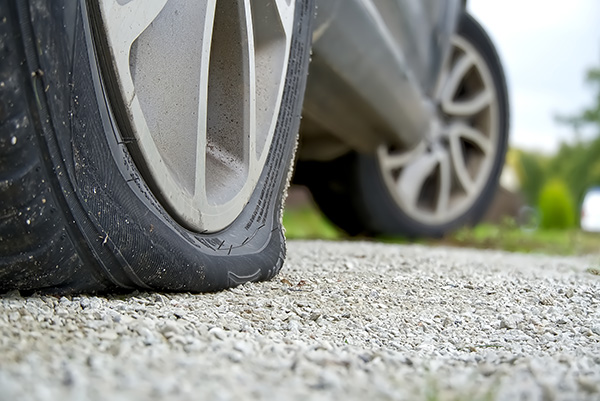
A tire that keeps deflating without an obvious cause can get frustrating fast. You put air in it, it looks fine for a little while, and then the same tire is low again. There is no screw in the tread, no dramatic damage, and no easy answer staring back at you.
Usually, the air is escaping from somewhere drivers do not think to check first.
Why A Tire Can Lose Air Without A Visible Hole
A tire only holds air when the entire assembly seals properly. That means the tire, wheel, valve stem, and bead area all have to stay airtight. If one of those areas starts leaking, the tire can keep losing air even though the tread surface looks completely normal.
That is why this problem is easy to misjudge. Drivers often focus only on the tire itself when the real issue may be at the wheel or the valve stem.
Valve Stems Are A Very Common Leak Source
Valve stems cause more slow leaks than a lot of people realize. Rubber stems get older, dry out, and crack. The valve core inside can loosen or wear too. When that happens, air starts escaping little by little until the tire is noticeably low a few days later.
This kind of leak rarely drops the tire all at once. It creates that repeating pattern where the same tire keeps needing air while the others stay close to normal. That is a big clue.
The Bead Seal Can Fail
The bead is the part of the tire that seals against the rim. If that sealing surface becomes uneven due to corrosion, dirt, or minor wheel damage, air can leak out around the edges. The tread may be perfectly fine, but the tire still will not hold pressure.
This happens more often on older wheels and in places where moisture and road grime have had time to wear on the metal. A bead leak can be stubborn, and it will usually keep coming back until the wheel is cleaned and resealed correctly.
A Bent Wheel Can Be The Whole Problem
A pothole or curb strike can bend the rim enough to create a slow leak without leaving obvious damage you can see right away. The tire may still look good, but the wheel is no longer sealing evenly. That is enough to let air escape little by little.
A few common causes show up again and again:
- Bent wheel edges from potholes
- Corrosion on the bead surface
- Cracked or aging valve stems
- Bead damage from previous tire installation
That is why the tire is not always the part that needs to be fixed.
Temperature Can Confuse The Situation
Cooler weather lowers tire pressure, and that alone can trigger a warning light. The important thing is to look at the pattern. If all four tires drop a little when temperatures change, that is normal. If one tire keeps losing much more than the rest, there is usually a real leak involved.
That difference matters because many drivers assume it is just weather for longer than they should. By the time they realize one tire is consistently worse, the same tire may already be wearing unevenly from repeated low pressure.
Why Repeated Air Loss Is More Than An Annoyance
A tire that keeps going low is not just inconvenient. Low pressure changes the way the car handles, creates extra heat inside the tire, and wears the tread much faster. It can shorten tire life, reduce fuel economy, and make the vehicle less stable during hard stops or quick turns.
That is why a slow leak should be handled before it becomes a much bigger tire problem. A tire that might be repairable today can end up ruined if it keeps being driven low for too long.
What A Proper Tire Inspection Should Cover
A proper inspection should look at the whole tire and wheel assembly, not just the tread. The valve stem, the bead seal, the wheel condition, and the pressure-loss pattern all help tell the story. That is what reveals whether the fix is a reseal, a valve stem replacement, a wheel repair, or a tire replacement.
During regular maintenance, this kind of issue is much easier to catch before it becomes a full flat or an avoidable tire purchase.
Get Tire Inspection and Repair In Denver, CO, With Mancinelli's Auto Repair Center
If one tire keeps deflating without an obvious cause, Mancinelli's Auto Repair Center in Denver, CO, can inspect the tire and wheel assembly, find the source of the air loss, and recommend the right repair.
Bring it in before a slow leak turns into a flat and a tire that could have been saved.